
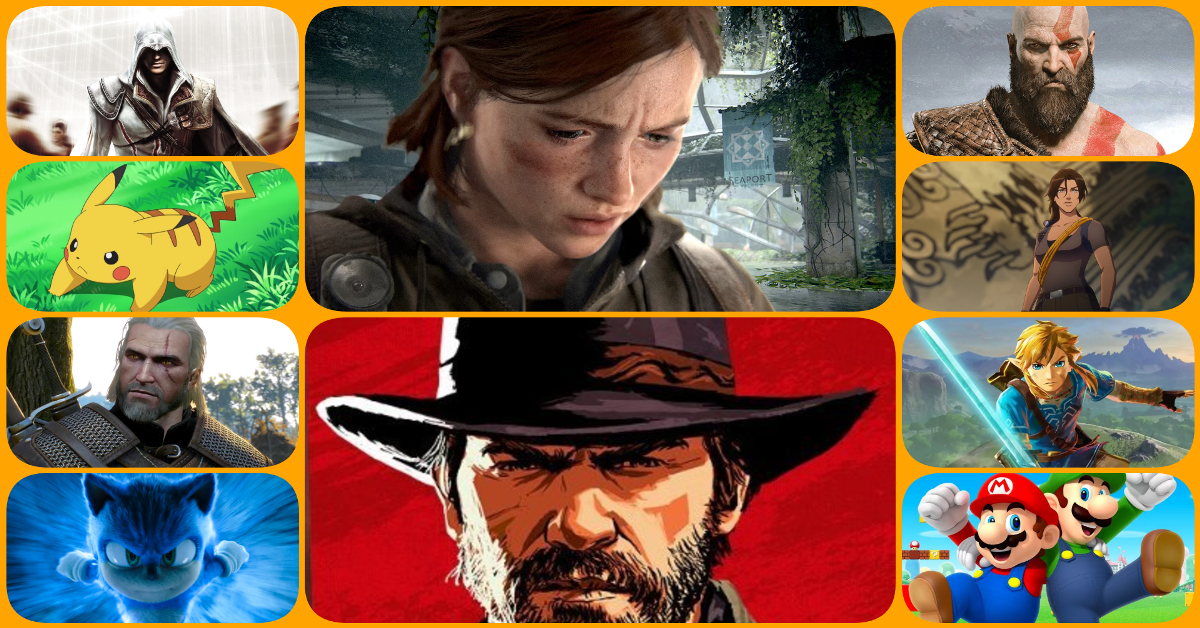
Video games provide more than just enjoyment. They are memories, feelings, and moments that remain with us long after the screen goes blank. Over the years, certain video game characters have done something extraordinary: they have crossed the line between fiction and reality and become a part of our lives. We didn’t just control them; we grew up with them, suffered alongside them, laughed with them, and occasionally mourned for them.
These characters were defined by more than just their power and graphics. They were defined by the heart. Their problems felt authentic. Their successes felt personal. Whether it was a plumber saving a kingdom, a warrior confronting fate, or a survivor attempting to rescue a loved one, these characters cemented their place in gaming history—and our hearts.
This is not simply a list.
This is a tribute.
Here are ten video game characters who have stolen our hearts forever.
1. Mario – More Than a Mascot, a Symbol of Hope
Mario’s emotional potency stems from something extremely unusual in modern entertainment: consistency. Regardless of how much the gaming business evolves, Mario remains a reminder that joy may be simple and everlasting. He does not age, get cynical, or lose his optimism. In a world where games frequently emphasize realism and darkness, Mario stands out as a symbol of hope.
What truly makes Mario steal hearts is that he never feels forced. He isn’t trying to be relatable—he simply is. His design, his movements, and even his sounds are engineered to feel friendly. The moment Mario jumps, players instinctively smile. That emotional reaction is powerful because it bypasses logic and goes straight to feeling.
For many people, Mario represents their first victory, their first failure, and their first lesson in persistence. Falling into pits taught patience. Missing jumps taught timing. Beating Bowser taught reward through effort. These lessons stayed with players long after childhood.
Mario isn’t just a character we like—he is a memory of who we were when life felt lighter.
2. Link – A Hero Defined by Sacrifice, Not Glory
Link’s emotional depth is sometimes overlooked due to his silence, yet this stillness is purposeful. Link is a figure who gives up everything—his upbringing, his peace, and often his identity—to safeguard a world that may never fully accept him.
Across lifetimes, Link is continually asked to give up his normal life. He rarely gets to settle down. He is hardly celebrated. His reward is survival, not happiness. This repeating motif generates a subtle sorrow, which gamers subconsciously experience.
In Breath of the Wild, Link’s amnesia is particularly painful. He has already saved the world once, failed, lost everything, and is now forced to do it again—with no memory of who he was. The world recognizes him, but he cannot remember himself. That emotional distance fosters a strong bond with the players, who gradually rediscover the world alongside him.
Link captures hearts because he embodies altruism without credit, a hero who saves not for praise, but because someone has to.
3. Lara Croft – Vulnerability Behind Strength
Lara Croft’s current presentation elevated her from an icon to a very relatable figure. What genuinely distinguishes her is not her brains or athleticism, but her vulnerability. She is terrified. She questions herself. She gets harmed. Nonetheless, she continues forward.
Lara’s emotional struggle is palpable in the reboot trilogy. She is not fearless; she develops courage through pain. Her successes feel earned since players see each failure along the road. This journey is meaningful because it reflects actual growth: becoming strong by overcoming weakness.
Lara’s legacy extends beyond representation. She demonstrated that complexity and passion could exist alongside action. She proved that strength does not imply emotional numbness. That balance is why she continues to capture hearts decades after her debut.
Lara Croft not only transformed gaming, but she also redefined who gaming heroines could be.
4. Kratos – Learning to Live with the Past
Kratos’ incapacity to move on from his past is the source of his emotional burden. In contrast to many redemption stories, Kratos’ actions cannot be undone. He is limited to carrying it. Every encounter he has with Atreus is shaped by that load.
His fear is not of monsters, but rather of returning to his former self. He uses distance, silence, and restraint as defense strategies. He has only ever loved destructively, thus he doesn’t know how to love tenderly.
Kratos is quite relatable because of this mental struggle. He represents the struggle of individuals who are haunted by their past selves despite attempting to improve. His narrative strikes a chord because it recognizes that development is difficult, gradual, and flawed.
Kratos steals hearts because he is making an effort, not because he is powerful.
5. Arthur Morgan – Humanity in Its Rawest Form
Honesty is the source of Arthur Morgan’s emotional power. Violence is not exalted in his tale. It challenges it. Arthur seeks redemption because he wants to leave a positive legacy, not because he feels he deserves it.
His disease is symbolic as much as physical. Long before the game acknowledges it, Arthur is gradually dying. He starts talking more softly. His decisions grow more compassionate. His thoughts get more weighty. Players experience a sense of urgency that is intensely personal as time seems to be running out.
The quietness of Arthur’s last moments makes them unforgettable. There isn’t a victory parade or a big speech. Just acceptance. That realism is both heartbreaking and exquisite.
Because his story appears unfinished, as actual lives frequently do, Arthur Morgan captures people’s emotions.
6. Ellie – The Cost of Survival
Ellie’s tale is one of deteriorating emotions. She loses some of her innocence with every setback, until surviving becomes survival at all costs. Her rage is not arbitrary; rather, it stems from unresolved anguish.
Players are frequently irritated by Ellie’s choices, but this annoyance is deliberate. It compels us to face painful realities regarding trauma. Ellie makes decisions because she doesn’t know how to stop suffering, not because they are right.
Instead of passing judgment, her story asks players to show empathy. Ellie is one of the most realistic characters in video games because of her emotional complexity.
Because she reminds us that survival doesn’t always equate to victory, Ellie captures our hearts.
7. Sonic the Hedgehog – Freedom Given a Face
Sonic’s attraction extends beyond its quickness. He stands for freedom, self-assurance, and independence. Sonic doesn’t wait for approval. He takes action. He questions authority. Without hesitation, he defends his buddies.
Sonic embodies teenage rebellion in many ways, including the want to move quickly, push boundaries, and live independently. Players who grew up in structured situations found great resonance in that mindset.
Sonic never gets conceited despite his self-assurance. He fights because it’s the proper thing to do, not for attention. His freedom is grounded in loyalty, which makes him endearing rather than careless.
Because he makes freedom seem attainable, Sonic captures people’s hearts.
8. Geralt of Rivia – Choosing Humanity in a Cruel World
Geralt’s moral weariness is the source of his emotional depth. He lives in a world where all decisions have repercussions and neutrality is unattainable. But when he can, he still chooses kindness.
Geralt’s genuine heart is revealed through his friendship with Ciri. He claims to be emotionally detached, but he is profoundly in love. He is silent, unwavering, and protective.
Because Geralt doesn’t act as though everything is fair, players fall in love with him. All he does is try to make things a little less brutal.
Because he demonstrates that kindness is a decision, even when it is painful, Geralt wins people over.
9. Pikachu – Innocence That Never Fades
Consistency is the key to Pikachu’s power. Pikachu continues to be a symbol of devotion and trust, regardless of how fierce battles get. Pikachu battles because it believes, not because it has to.
This emotional purity strikes a deep chord. Players are reminded by Pikachu of friendships that are based on compassion rather than need.
Pikachu captivates people because it symbolizes unconditional love.
10. Ezio Auditore – A Lifetime Shared with Players
Ezio’s adventure is unusual in that players follow his complete life arc. We witness his youth, fury, wisdom, and acceptance. Few characters allow for that amount of intimacy.
Ezio’s development appears natural. He does not abandon his grief; rather, he learns from it. By the end, Ezio is no longer seeking vengeance. He seeks understanding.
Ezio steals hearts because he feels like someone we grew up with, not merely as a character.
Why These Characters Will Never Be Forgotten
These characters stayed with us because they evoked genuine emotions. They reminded us that video games are more than just winning; they’re also about connection, passion, and storytelling.
These characters will live on in our hearts long after visuals and systems have evolved.