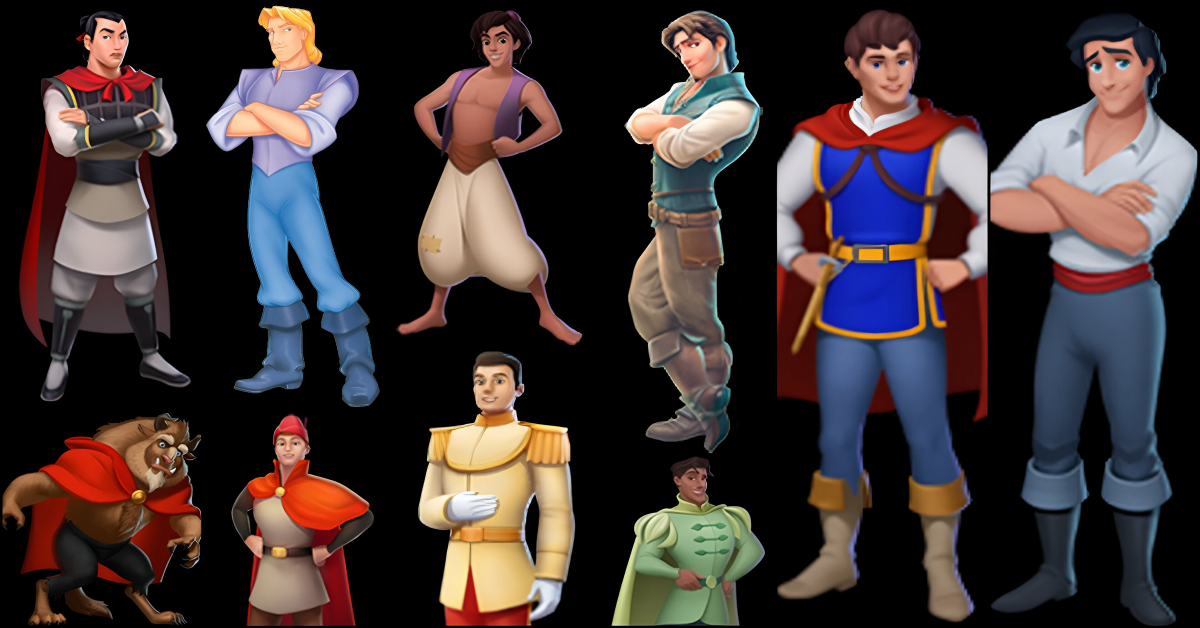
Disney princes have traditionally represented courage, passion, and heroism. From the earliest fairy-tale-inspired figures to modern, multifaceted protagonists, these princes are more than just supporting characters; they propel tales, inspire audiences, and represent changing cultural ideas of masculinity and nobility. Understanding their backgrounds, characters, and legacies gives a complete picture of Disney storytelling and how the prince archetype evolved over time.
This article dives into all ten official Disney princes, detailing their adventures, responsibilities, and lasting significance in Disney canon.
1. The Prince (Florian) – Snow White and the Seven Dwarfs (1937)
As Disney’s first prince, Florian, also known as “The Prince,” laid the groundwork for all future princes. Despite his limited screen time, he plays an important role in Snow White and the Seven Dwarfs, waking Snow White from her enchanted slumber with “true love’s kiss.”
Florian’s narrative is easy yet meaningful. He embodies the ideals of dignity, kindness, and courage. Unlike other princes, Florian does not engage in combat or adventure; his heroism is based on moral strength and love. His character is elegant, noble, and confident, yet mild, evoking 1930s princely aspirations.
While Florian’s role is brief, his impact is significant. He acts as a narrative catalyst, underlining the concept that love, purity, and courage can defeat evil. Beyond the tale, Florian built the archetype of the Disney prince: a noble, attractive, and morally pure protagonist whose minor actions have serious consequences.
Florian’s significance goes well beyond his single appearance. He inspired decades of princes who matched passion and heroism, establishing a blueprint for future Disney storytelling. His story demonstrates that heroism does not always require action-packed fights; moral strength and confidence in virtue can alter the world.
2. Prince Charming – Cinderella (1950)
Prince Charming, Cinderella’s passionate love interest, exemplifies elegance, grace, and fidelity. His story is about determination and destiny: he searches endlessly for the woman whose foot fits the glass slipper. Charming’s heroism is subtle, manifested via patience, observation, and determination rather than conflict.
Charming’s personality is elegant, serene, and noble. He is the ideal romantic companion for Cinderella, signifying dedication and respect. Though he talks little, his narrative significance is enormous—he is a symbol of hope and tenacity, demonstrating that true love necessitates commitment and patience.
His romance with Cinderella exemplifies the timeless fairytale idea that love and destiny converge. Charming’s presence underscores that heroes are distinguished not just by their actions, but also by their capacity to inspire hope and uphold moral principles.
Charming’s legacy in the Disney canon is vast. He is still the ultimate romantic prince and a timeless embodiment of fairy-tale values. His position demonstrates that nobility is more than just a title or strength; it is also about loyalty, integrity, and respect for others.
3. Prince Phillip – Sleeping Beauty (1959)
Prince Philip represents a transition in Disney’s prince paradigm. Unlike the previous passive characters, Phillip is energetic, courageous, and immediately participating in the story’s quest. In Sleeping Beauty, he battles Maleficent, faces dragons, and overcomes mystical hurdles to save Princess Aurora.
Phillip’s personality includes courage, determination, and moral integrity. He exemplifies sacrifice and bravery by sacrificing life and limb to battle evil. Unlike Florian and Charming, Phillip’s heroism is action-oriented, marking a shift in Disney storytelling.
Phillip’s participation with Aurora is equally significant. Their romance is founded on mutual adoration and destiny, but Phillip demonstrates that love necessitates bravery and initiative. His valor goes beyond romance; he is a defender of justice, a warrior, and a moral compass.
Phillip’s legacy is profound: he turned the Disney prince from a passive romantic symbol to an aggressive hero. He paved the way for future princes who mix bravery, moral integrity, and action, inspiring characters such as Eric, Aladdin, and Flynn Rider.
4. Prince Eric – The Little Mermaid (1989)
A contemporary version of the Disney prince, Prince Eric is courageous, wise, and sensitive. Eric is Ariel’s romantic interest in The Little Mermaid, but he also actively contributes to the story. He shows bravery and ingenuity while saving her from Ursula’s magical dangers.
Eric has an adventurous, kind, and astute personality. In addition to Ariel’s beauty, he respects her bravery and uniqueness. Mutual respect, adventure, and emotional connection are the cornerstones of their partnership. Eric is a multifaceted figure whose bravery blends action, intelligence, and heart, in contrast to previous princes.
Eric’s legacy unites traditional and contemporary archetypes. He stands in for a prince who respects his partner’s autonomy while actively influencing the narrative. Eric’s impact can be seen in later Disney movies, showing that love and bravery can coexist with self-reliance and teamwork.
5. The Beast / Prince Adam – Beauty and the Beast (1991)
Prince Adam, often known as the Beast, offers a fresh twist on Disney princes. Cursed and isolated, he must acquire empathy, kindness, and selflessness to reclaim his humanity. The Beast’s quest is about both emotional growth and romance.
Initially arrogant and aggressive, the Beast goes through significant character development. Through his friendship with Belle, he develops compassion, patience, and humility. Unlike previous princes, the Beast teaches that greatness is not innate but can be developed through love and self-reflection.
The Beast’s story underscores that true nobility comes from character, not pedigree. His metamorphosis from terrifying and secluded to compassionate and courageous reshaped the Disney prince ideal. His legacy is to demonstrate that personal development and emotional intelligence are essential components of heroism, inspiring subsequent narratives that emphasize inner strength and moral fortitude.
6. Aladdin – Aladdin (1992)
Aladdin’s path from street urchin to hero prince transformed the Disney prince concept. In Aladdin, heroism is derived by courage, wit, and integrity rather than hereditary nobility. Aladdin’s wit, bravery, and loyalty allow him to overcome obstacles, win Jasmine’s heart, and eventually fulfill his destiny.
Aladdin is adventurous, resourceful, and morally pure. His character proves that heroism is available to everyone, regardless of social position. Aladdin and Jasmine form a connection based on equality, respect, and shared aspirations, exemplifying Disney’s modern partnership paradigm.
The legacy of Aladdin is enormous. He demonstrated that princes might rise from lowly origins by prioritizing heart, talent, and ingenuity over social standing. Aladdin’s tale inspired princes and heroes who merit their position with deed, courage, and morality, and it had an impact on other Disney stories.
7. John Smith – Pocahontas (1995)
John Smith is an adventurer who personifies curiosity, flexibility, and moral courage. Pocahontas teaches him how to handle cultural differences and understand the opinions of others who are not like him. Smith’s heroism is defined by learning, empathy, and personal progress, not classic romanticism.
Smith’s personality is adventurous, introspective, and courageous. His narrative indicates that princes may lead by respect and understanding, rather than just noble birth. His connection with Pocahontas is built on equality, collaboration, and mutual admiration.
John Smith’s legacy lives on: he represents princes who achieve heroism through openness, empathy, and a willingness to evolve. His character embodies the growing Disney concept of a prince who leads by knowing and adapting to the world around him.
8. Li Shang – Mulan (1998)
Li Shang is a military leader that exemplifies discipline, courage, and integrity. Unlike traditional princes, his story emphasizes leadership, moral strength, and respect for others. Shang admires Mulan for her bravery and knowledge more than her looks, indicating a more progressive portrayal of love relationships.
Shang’s personality is disciplined, honorable, and determined. His part in Mulan stresses teamwork, equality, and heroism based on action and moral courage. His relationship with Mulan is built on mutual respect, common aspirations, and adoration.
Li Shang’s legacy reimagines the Disney prince paradigm by demonstrating that nobility and heroism are about actions and character rather than birthright, inspiring modern storylines that value equality, integrity, and teamwork.
9. Prince Naveen – The Princess and the Frog (2009)
Prince Naveen starts out as a carefree, privileged royal but evolves into a responsible, loving hero through obstacles and love. His narrative demonstrates personal development, humility, and the importance of hard work and collaboration.
Naveen’s personality is lively, endearing, and initially impulsive. His metamorphosis focuses on maturity, responsibility, and respect for others. His partnership with Tiana exemplifies equality, common aims, and mutual development.
Naveen’s legacy is significant: he represents modern princes who learn to be heroes by personal development and effort, proving that nobility is earned rather than inherited.
10. Eugene Fitzherbert / Flynn Rider – Tangled (2010)
Flynn Rider, a witty but imperfect rogue, grows into a true prince through bravery, love, and selflessness. Initially self-interested, Flynn’s interactions with Rapunzel change him into a hero who prioritizes others before himself.
Flynn’s personality is intelligent, funny, and relatable. His journey emphasizes redemption, progress, and collaboration. His relationship with Rapunzel emphasizes equality, trust, and mutual respect, demonstrating that heroism is acquired through character growth rather than social status.
Flynn’s legacy is profound: he proves that princes may be nuanced, flawed, and dynamic, addressing current viewers’ yearning for multidimensional, accessible heroes.
The Evolving Legacy of Disney Princes
From Florian to Flynn Rider, Disney’s princes have changed tremendously. Early princes were passive icons of aristocracy and romance, whereas contemporary heroes represent activity, progress, equality, and emotional intelligence. These ten princes represent heroism in all of its aspects, including bravery, integrity, respect, and love.
They tell their audiences that courage is defined by decisions, compassion, and personal development. Whether awakening a princess, defeating evil, or learning humility, Disney princes are enduring emblems of goodness and collaboration.
Through these characters, Disney has demonstrated that heroism, love, and nobility can take different forms, inspiring audiences for decades to believe in courage, growth, and the power of doing the right thing.