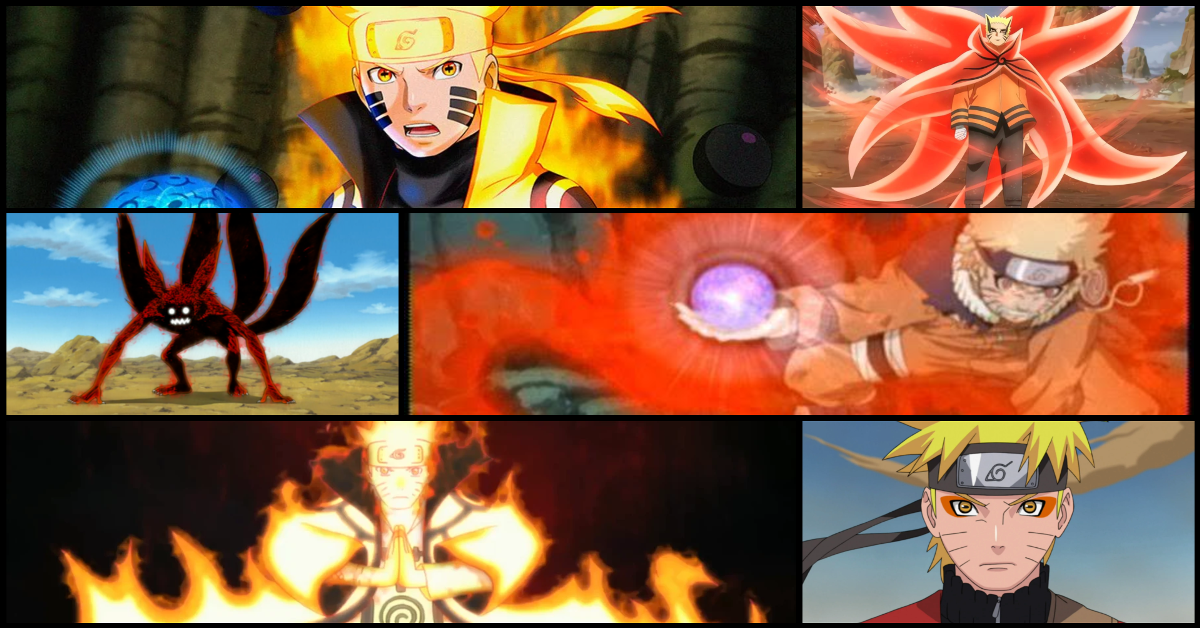
Naruto Uzumaki’s transformation from playful underdog to Hokage-level powerhouse is marked by the various powerful forms he discovers along the road. Each change, from his first usage of chakra to his ultimate Baryon Mode, represents not only a gain in strength, but also a step ahead in his development as a ninja, friend, and guardian of the ninja community.
In this article, we’ll go over each Naruto form in order, covering every significant transformation he uses in Naruto, Shippuden, and Boruto. Whether you’re reviewing the series or delving deep into Naruto’s evolution, this is the ultimate reference for understanding his power advancement.
Naruto Uzumaki’s transformation from a cheeky outsider to the ninja world’s savior is one of the most memorable moments in anime history, both symbolically and practically. Naruto has multiple physical and spiritual transformations throughout the Naruto and Boruto series, each of which reflects his increasing strength, maturity, and emotional resilience.
Here’s a comprehensive look at all of Naruto’s main forms, from his humble origins to god-like power levels.
1. Base Form Naruto (Normal Form)
Naruto Uzumaki’s base form represents his modest beginnings as a ninja. Without Kurama’s chakra or Sage skills, he relies on his natural Uzumaki energy, drive, and cunning battle tactics. His unique Shadow Clone Jutsu and Rasengan techniques played a significant influence in his early successes. Even without advanced transformations, Naruto demonstrates glimpses of brilliance and promise, frequently stunning experienced opponents. This form lays the groundwork for his evolution into one of the most powerful shinobi in the Naruto universe.
2. First Use of Kurama’s Chakra (Initial Form)
Naruto initially uses the Nine-Tails’ chakra in emotionally charged circumstances, such as when he is seriously hurt or furious. A red chakra cloak that enhances his strength, speed, and recuperation is a defining feature of this initial form. Kurama’s power pours out when Naruto is upset, hence the transition is not intentional. It gives him a much-needed advantage in risky battles, while being fleeting and unreliable. This phase emphasizes Naruto’s close bond with the tailed beast trapped within of him and marks a turning point in his power development.
3. One-Tailed Cloak Naruto
Naruto may access a more potent form of Kurama’s power if his emotional state worsens, particularly when he is extremely angry or stressed. Behind him, the red chakra cloak thickens and becomes a tail, getting the moniker “One-Tailed Cloak.” Naruto’s fighting skills significantly improve in this form. He is more adaptable in combat because he can create chakra arms for both offensive and defense. But he begins to become less human and more animalistic. This change is the first indication of the increasing strength—and peril—of his relationship with the Nine-Tails.
4. Four-Tailed Naruto Transformation
Naruto’s utilization of Kurama’s chakra has advanced significantly with the Four-Tailed Form. He loses conscious control at this point, and a violent, bubbling chakra that like a small Nine-Tailed Fox envelops his body. The strong energy causes his skin to peel away, transforming him into a beastly figure with immense destructive power. When Naruto’s anger gets overwhelming during high-stakes conflicts, this form manifests. It’s one of the riskiest phases of his metamorphosis, and he frequently needs outside assistance to regain consciousness.
5. Six-Tailed Naruto
Naruto’s Six-Tailed Form brings him closer to a full-tailed beast transformation. His appearance gets more grotesque, as the corrosive chakra cloak begins to hurt him. This version of Naruto is devoid of reasonable reasoning and transforms into a force of pure destruction. His attacks become increasingly erratic and widespread. While it is an intimidating display of strength, this style is unstable and unsustainable. It underscores the consequences of using the Nine-Tails without mastering them—a lesson Naruto must learn before moving forward.
6. Eight-Tailed Naruto (Near Full Transformation)
During the struggle with Pain, Naruto almost completely transforms into the Nine-Tails. This incarnation of Naruto demonstrates the zenith of uncontrolled Jinchūriki power, as eight tails form and the fox’s skeletal structure takes shape. The catastrophic potential is great, and only a last-minute intervention by his father, Minato Namikaze, prevents him from unleashing the last tail. This is a significant narrative climax, emphasizing Naruto’s urgent need to establish balance and control over Kurama’s power in the next conflicts.
7. Tailed Beast Form (Kurama Manifestation)
After earning Kurama’s trust, Naruto is able to fully manifest the Nine-Tails in battle. This Tailed Beast Form enables him to summon a giant golden chakra avatar resembling Kurama, capable of unleashing destructive Tailed Beast Bombs and participating in large-scale battle. Unlike previous transformations, Naruto maintains full consciousness and control. This change marks a significant turning point in the series, reflecting his complete alignment with Kurama and demonstrating a great increase in both power and maturity.
8. Sage Mode Naruto
Naruto learns the transformation Sage Mode from Mount Myoboku’s toads. By absorbing natural energy and harmonizing it with his own chakra, he improves his physical strength, speed, sensory acuity, and ninjutsu ability. In this form, Naruto can identify foes from a considerable distance and use advanced Rasengan techniques such as the Rasenshuriken. The orange pigmentation surrounding his eyes is a distinctive visual indication. Unlike Kurama-based forms, Sage Mode is entirely Naruto’s own power, demonstrating his development as an independent and resourceful shinobi.
9. Kyuubi Chakra Mode (KCM1)
When Naruto forcibly obtains Kurama’s chakra during training with Killer Bee, Kyuubi Chakra Mode—also known as KCM1—emerges. With this form, he is enveloped in a smooth, golden aura that enhances his powers without the destructive, wild repercussions of previous cloaks. He acquires many chakra arms, increased speed, and the capacity to detect negative emotions. Naruto’s first real stride toward controlling the Nine-Tails’ power without succumbing to its influence is represented by this effective and controlled transformation.
10. Six Paths Kurama Mode
Hagoromo Ōtsutsuki gives Naruto chakra during the Fourth Great Ninja War, enabling him to use the Six Paths Kurama Mode. The force of the Nine-Tails and the celestial powers of the Sage of Six Paths are combined in this transformation. Naruto acquires enhanced sensory perception, flight, and Truth-Seeking Orbs. He achieves previously unheard-of levels of chakra output and physical strength. In this mode, Naruto transforms into a god-tier ninja who can fight strong opponents like Kaguya Ōtsutsuki and use his newfound spiritual powers to revive comrades.
11. Six Paths Sage Mode
Six Ways Sage Mode is an improved and polished condition that expands upon the Six Paths chakra and Sage Mode. Naruto is able to trace chakra across dimensions, sense everything in his surroundings, and identify threats that are undetectable. He has total mastery over sophisticated natural changes, flying, and creating Truth-Seeking Orbs. He is practically unbeatable in combat thanks to his greatly enhanced healing and reaction times. Naruto uses this form during his most strenuous and high-level battles because it is his most balanced and divine state.
12. Asura Kurama Form
The Asura Kurama Form appears during Naruto’s final confrontation with Sasuke. The chakra avatar combines Kurama’s complete might with the spirit of Asura Ōtsutsuki, Naruto’s ancestral precursor. This warrior-like form is armed with massive Rasengan-based weaponry and can oppose Sasuke’s Susanoo-enhanced moves. It depicts the pinnacle of Naruto’s transformation path, combining physical strength, spiritual lineage, and flawless coordination with his tailed beast partner. The shape emphasizes Naruto’s strength and involvement in resolving a centuries-old battle.
13. Yang Kurama Naruto
Following the struggle against Madara, the original Nine-Tails is divided into Yin and Yang halves. Naruto keeps the Yang part, which still gives him incredible power. He continues to use Kurama Chakra Mode and Tailed Beast Bombs successfully, demonstrating that even half of Kurama’s power is sufficient to maintain his domination. This transformation validates Naruto’s place as the ninja world’s guardian and demonstrates that strength is more than just raw energy; it also involves experience, control, and strategy.
14. Yang Kurama Sage Mode
Combining Yang Kurama’s chakra with the perfected Sage Mode yields an extraordinarily efficient and adaptable transformation. Naruto may now face god-level foes like Momoshiki Ōtsutsuki in Boruto. The form increases Naruto’s physical power, response speed, and chakra precision while also allowing for extended use without undue strain. It is the most balanced form he has used frequently during the Boruto era, demonstrating his progress in combining natural energy with tailed beast chakra.
15. Baryon Mode
Introduced during the battle with Isshiki Ōtsutsuki in Boruto, Baryon Mode is Naruto’s most potent and terrifying form. Naruto receives a massive, transient power increase by combining Kurama’s chakra with his own in a manner akin to nuclear fusion. His reflexes and quickness become unparalleled, and even making physical contact with adversaries depletes their vitality. But this shape has a terrible price: Kurama’s life. Naruto only uses Baryon Mode as a last resort when the world’s fate is in jeopardy.
What Naruto’s Forms Reveal About His Evolution
Naruto’s transformations are more than simply showy power-ups—they convey the story of his inner fights, increasing alliances, and persistent drive. From mastering Sage Mode to forging unification with Kurama and unlocking god-tier powers, each form signifies a milestone in his legendary quest.
As Boruto progresses, Naruto’s legacy lives on—not only in his kid, but also in the remarkable adventure that transformed him into a shinobi hero. Whether you’ve been a fan for a long time or are just getting started, Naruto’s maturation remains one of anime’s most inspirational power progressions.