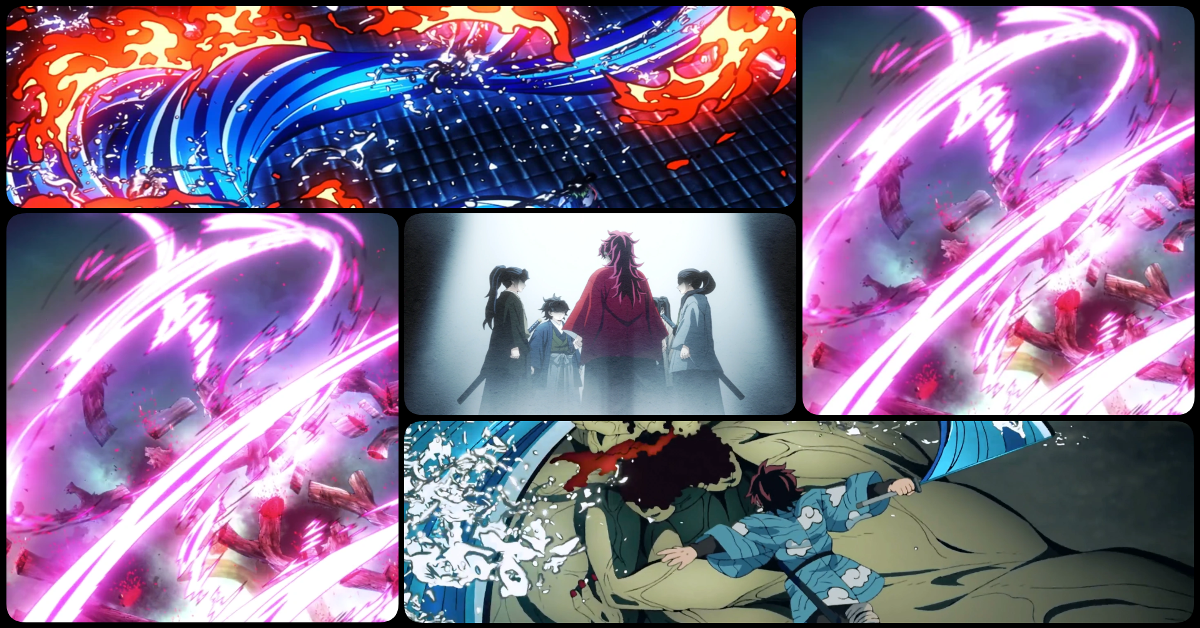
Breathing Styles are the cornerstone of human power against demons in Demon Slayer: Kimetsu no Yaiba. Demon Slayers use regulated breathing techniques to push their frail human bodies past their natural limits, in contrast to demons who rely on Blood Demon Arts and regeneration. By improving physical skills like strength, speed, perception, endurance, and swordsmanship, these methods enable humans to compete with supernatural foes.
Breathing styles are ideologies, customs, and legacies that have been passed down through the generations; they are more than just fighting tactics. Every style is a reflection of the personality, surroundings, and emotional condition of its owner. Every shape, from the graceful accuracy of Flower Breathing to the primordial strength of Sun Breathing, tells a tale.
The origins, forms, users, strengths, weaknesses, and relationships between all known Breathing Styles in Demon Slayer are all covered in detail in this blog.
What Are Breathing Styles?
Breathing styles are swordsmanship methods that incorporate particular movement patterns along with Total Concentration Breathing. Users significantly improve their physical skills by regulating blood flow and oxygen intake. Breathing Styles enable humans to imitate natural elements through mobility, speed, and accuracy, but they do not bestow supernatural abilities.
Total Concentration Breathing
Total concentration Breathing is the foundational technique for all disciplines. It enables a Demon Slayer to breathe optimally at all times, increasing oxygen efficiency and physical output. Advanced users can even do it while asleep.
Without Total Concentration Breathing, no Breathing Style can be done to its full capacity.
The Origin of All Breathing Styles: Sun Breathing
Sun Breathing (Hinokami Kagura)
Yoriichi Tsugikuni established Sun Breathing, the first and strongest Breathing Style. It serves as the foundation for all subsequent breathing styles.
Creator: Yoriichi Tsugikuni
Primary Users: Yoriichi Tsugikuni, Tanjiro Kamado
Weapon: Nichirin Sword (Black turning crimson)
Sun Breathing properly coordinates breathing, movement, and sword strikes. It puts a tremendous effort on the body, making it nearly impossible for most people to perfect.
Known Forms of Sun Breathing
Sun Breathing consists of 13 continuous forms, designed to be chained together endlessly:
- Dance
- Clear Blue Sky
- Raging Sun
- Burning Bones, Summer Sun
- Setting Sun Transformation
- Sunflower Thrust
- Dragon Sun Halo Head Dance
- Fake Rainbow
- Scorching Crimson Lotus
- Fire Wheel
- Flashing Flame Spiral
- Flame Dance
- Thirteenth Form (Endless Loop)
Strengths:
- Superior combat efficiency.
- Counteracts demon regeneration.
- Overwhelms even upper-level demons
Weaknesses:
- Extreme physical strain.
- Almost tough to master.
The Five Main Breathing Styles
Yoriichi’s pupils developed these styles to fit various body types and personalities.
1. Water Breathing
Derived From: Sun Breathing
Primary Users: Giyu Tomioka, Tanjiro Kamado, Sakonji Urokodaki
Water Breathing is one of the most balanced and extensively taught breathing techniques in the Demon Slayer Corps. It emphasizes adaptability, fluid transitions, and continuous movement, making it suitable for both novices and experienced swordsmen. Rather than overwhelming the opposition with brute force, Water Breathing focuses on flowing around assaults, redirecting momentum, and striking with accuracy at the appropriate time.
Water Breathing’s philosophy is based on flexibility. Just like water can assume any shape, this style enables the user to respond calmly to unexpected situations. Its forms span from simple slashes to sophisticated defensive maneuvers, making it useful in both one-on-one and group battles. Giyu Tomioka’s calm and controlled attitude reflects the composed quality of this approach, whilst Tanjiro’s emotional elasticity enables him to apply it imaginatively.
Although Water Breathing lacks the raw destructive strength of ways such as Flame or Stone Breathing, its adaptability makes it one of the most dependable styles in long-term combat. Advanced techniques, such as Giyu’s Dead Calm, show how Water Breathing can fully shut off enemy strikes when perfected.
2. Flame Breathing
Derived From: Sun Breathing
Primary User: Kyojuro Rengoku
Flame Breathing is a strong, arrogant sword technique that emphasizes powerful, high-impact blows. In contrast to Water Breathing’s flexibility, Flame Breathing is direct and powerful, with the goal of swiftly ending conflicts with overwhelming force. Every action is audacious, straightforward, and driven by deep conviction.
The steadfast spirit of its users, particularly Kyojuro Rengoku, is reflected in this style. In order to ensure that every blow has the most power possible, Flame Breathing heavily emphasizes posture, footwork, and full-body coordination. It works especially well in direct conflicts where hesitancy can be lethal.
Flame Breathing requires a lot of endurance and mental toughness, yet it excels in offensive strength and morale. When used with conviction and determination, Flame Breathing becomes a devastating force that can defeat even Upper Rank demons, but its lack of flexibility makes extended or highly tactical engagements more difficult.
3. Thunder Breathing
Derived From: Sun Breathing
Primary Users: Zenitsu Agatsuma, Jigoro Kuwajima
The speed-oriented breathing technique known as “Thunder Breathing” focuses explosive strength in the user’s legs. This technique emphasizes lightning-fast movements intended to conclude confrontations with a single, decisive blow rather than drawn-out exchanges. Acceleration, timing, and accuracy are the cornerstones of any method.
The full potential of Thunder Breathing is demonstrated by Zenitsu Agatsuma’s mastery of it. Zenitsu demonstrated that mastery of a single technique may match versatility by mastering Thunderclap and Flash to an exceptional degree despite having difficulty learning other forms. Thunder Breathing’s quickness gives little opportunity for counterattacks, making it particularly powerful against opponents that depend on reaction time.
The physical toll that Thunder Breathing takes is its drawback. If used incorrectly or excessively, the extreme strain on the legs might result in serious injury. Because of this, mastery of this method is rewarded with unparalleled speed and lethality, but it also requires rigorous training and discipline.
4. Wind Breathing
Derived From: Sun Breathing
Primary User: Sanemi Shinazugawa
Wind Breathing is a fierce and combative style that uses constant attack to overpower opponents. Its powerful and unpredictable movements resemble the destructive power of storms and gales. Wind Breathing prefers pressure and unpredictability above grace or restraint.
This design is a fantastic fit for Sanemi Shinazugawa’s erratic nature. Wide, jagged slashes that rip through several targets and upend enemy formations are used by Wind Breathing. Because the chaotic attack patterns are hard to stop, it works particularly well against groups of demons or opponents with powerful defenses.
However, Wind Breathing leaves little space for defense and requires a significant amount of endurance. Users need to be incredibly resilient and pain-tolerant. When used skillfully, it turns into a vicious technique that gives opponents no time to recuperate or strike back.
5. Stone Breathing
Derived From: Sun Breathing
Primary User: Gyomei Himejima
The most demanding breathing style is stone breathing, which places a strong emphasis on defense, strength, and stability. Stone Breathing rules by sheer strength and unwavering presence, in contrast to other methods that depend on quickness or dexterity. Even the most powerful demons can be crushed by its slow but destructive methods.
Gyomei Himejima is the perfect Stone Breathing user because of his enormous body and spiritual discipline. The battlefield is transformed into an area of total control by the style’s frequent use of heavy weaponry and broad attack arcs. Because Stone Breathing can penetrate regeneration and protection, it is especially powerful against Upper Rank demons.
Accessibility is Stone Breathing’s main drawback. It can only be used efficiently by those with exceptional physical stamina and strength. In spite of this, it remains one of the Demon Slayer Corps’ most potent Breathing Styles ever created.
Derived Breathing Styles
These styles, which were adapted to meet specific demands, developed from the primary five.
1. Mist Breathing
Derived From: Wind Breathing
User: Muichiro Tokito
The goal of the extremely cunning and skilled sword style known as “Mist Breathing” is to obstruct the adversary’s vision and sense of time. Mist Breathing confuses opponents with erratic movement patterns, abrupt disappearances, and delayed strikes, in contrast to aggressive methods that rely on pure power. Enemies mistake distance and direction as the user provides the appearance of disappearing into mist.
Mist Breathing is a fantastic fit for Muichiro Tokito’s fighting style. His movements are unpredictable because of his serene, almost empty-minded manner, which enables him to transition between forms with ease. Because it interferes with their ability to precisely track the swordsman, mist breathing is particularly effective against strong demons that depend on perception and quick reflexes.
Forms
- Low Clouds, Distant Haze
- Eight-Layered Mist
- Scattering Mist Splash
- Shifting Flow Slash
- Sea of Clouds and Haze
- Lunar Dispersing Mist
- Obscuring Clouds
2. Love Breathing
Derived From: Flame Breathing
User: Mitsuri Kanroji
Love Breathing is a distinctive and emotionally charged technique that emphasizes flexibility, quick movement, and long-range strikes. While developed from Flame Breathing, Love Breathing trades raw force for speed, unpredictability, and flexibility. The style embodies Mitsuri Kanroji’s personality—warm, passionate, and expressive—transforming emotion into martial power.
What actually distinguishes Love Breathing is the use of a flexible Nichirin sword that functions more like a whip than a standard blade. This enables Mitsuri to attack from unexpected angles, hit many adversaries at once, and maintain distance while delivering fatal blows. Love Breathing excels in chaotic battles when mobility and adaptability are crucial.
3. Serpent Breathing
Derived From: Water Breathing
User: Obanai Iguro
Serpent Breathing focuses on twisting, bending, and winding sword movements that resemble snake action. Unlike Water Breathing, which flows smoothly, Serpent Breathing introduces sudden curves and uneven attack trajectories, making it harder for enemies to predict the course of each stroke.
Obanai Iguro’s precision and discipline make him an excellent practitioner of this technique. Serpent Breathing excels at close combat, allowing the user to target key spots while avoiding resistance. It is especially powerful against demons with robust exteriors, as the curved slashes can pass through gaps and weak points.
4. Flower Breathing
Derived From: Water Breathing
Users: Kanae Kocho, Kanao Tsuyuri
Flower Breathing is a beautiful and sophisticated style that emphasizes grace, precision, and acute perception. It’s about perfect timing and awareness rather than overpowering force. The movements like petals blowing in the breeze, concealing lethal precision beneath their beauty.
One important characteristic of Flower Breathing is its capacity to sharpen the user’s senses. Advanced techniques enable users to slow down their perception of time, allowing them to respond to even the most rapid strikes. However, this enhanced sense comes at a cost, putting enormous pressure on the eyes and body if used excessively.
5. Insect Breathing
Derived From: Flower Breathing
User: Shinobu Kocho
Insect Breathing is a specialized variant intended for users who lack the physical strength required to decapitate demons. Instead of using physical force, this style emphasizes thrusting assaults and the usage of lethal poisons produced from wisteria blooms.
Shinobu Kocho invented Insect Breathing to compensate for her lower stature, demonstrating that intelligence and technique can outperform brute power. Each stab targets important sections of a demon’s body, injecting poison that prevents regeneration and eventually kills it. Insect Breathing reflects the Demon Slayer Corps’ ability to adapt and innovate.
6. Sound Breathing
Derived From: Thunder Breathing
User: Tengen Uzui
Sound Breathing is an aggressive and flashy combat style that turns battle rhythms into audio patterns. By analyzing the sounds made during combat, the user can anticipate enemy actions and openings. This technique emphasizes Tengen Uzui’s shinobi background by combining stealth, explosives, and overpowering force.
Sound Breathing excels in large-scale clashes with several opponents. The employment of explosions and chained swords results in controlled chaos, making it difficult for enemies to adjust. While forceful, the style necessitates high physical fitness and spatial awareness.
7. Moon Breathing (Forbidden Style)
Derived From: Sun Breathing
User: Kokushibo
Moon Breathing is a corrupted, demonic variation infused with Blood Demon Art.
8. Beast Breathing
Derived From: Wind Breathing
User: Inosuke Hashibira
Beast Breathing is wild, instinctual, and unpredictable.
Breathing Styles and Demon Slayer Marks
Advanced users awaken the Demon Slayer Mark, which increases Breathing Styles at the expense of longevity.
Breathing Styles are the essence of Demon Slayer. Each style symbolizes a unique battle philosophy, influenced by the user’s heart, body, and past. From the sublime beauty of Sun Breathing to the ferocious chaos of Beast Breathing, these practices elevate ordinary people to legendary status.
Understanding Breathing Styles entails comprehending the fundamental essence of Kimetsu no Yaiba: the eternal conflict between human will and hideous despair.