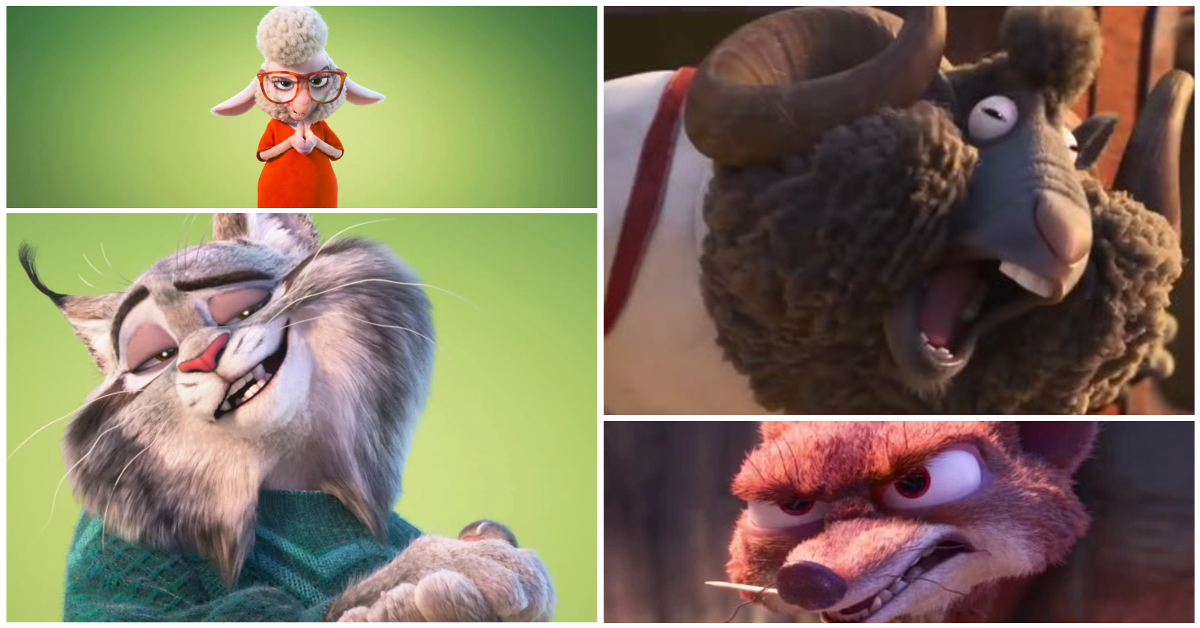
Zootopia is a city of contrasts. On the surface, it appears bright, enthusiastic, and full of possibilities. But beneath the towering towers and bustling streets is a web of illegal activity and ethically questionable personalities. Unlike typical animated films, which frequently focus on a single villain, Zootopia depicts a complex criminal ecosystem filled with masterminds, enforcers, opportunists, and background characters. Each individual contributes uniquely to the city’s darker side, and their presence influences both the narrative and world-building in ways that are uncommon in animated films.
The majority of Zootopia’s antagonists are realistic and grounded, which adds to their appeal. They are not bad for the sake of amusement; rather, their motivations are driven by ambition, fear, loyalty, or survival. Dawn Bellwether, for example, is a strategic manipulator, whereas Doug Ramses allows harm to occur through mindless compliance. Others, such as Duke Weaselton, act for personal gain and convenience. Collectively, these characters form a metropolis that is both vibrant and frighteningly nuanced.
This article provides a thorough, character-focused analysis of each villain in Zootopia, examining their personalities, motives, and effects on the city.
1. Dawn Bellwether: The Silent Architect of Fear
Dawn Bellwether is Zootopia’s most sophisticated enemy. When introduced as the courteous, modest assistant mayor, she appears weak, timid, and easily missed. Her soothing voice and gentle manner are tools in her armory, allowing her to conceal a cunning intellect capable of controlling a whole city. Bellwether’s villainy is cerebral and psychological, not physical. Her quiet patience, careful thinking, and thorough planning of events make her far more deadly than any blatantly confrontational figure.
Her descent into villainy is the result of years of systematic underestimating. She acquired bitterness after being overlooked in the political and professional areas, which eventually turned into ambition. Instead of confronting her frustrations openly, she turns them into complex plans to destabilize Zootopia. By arranging a series of crises to instill anxiety, she frames herself as a savior while secretly influencing the outcome. Her talent stems from her capacity to control perception—convincing the city that she is a part of the solution while actually architecting the problem.
Bellwether is terrifying because of her self-righteousness. She believes her acts are justifiable and sees terror as a tool for social transformation. This nuanced portrayal shows that some of the most deadly villains are those who truly believe they are heroes. Zootopia employs Bellwether to investigate how ambition, hatred, and intelligence can combine to produce a truly disturbing antagonist.
2. Doug Ramses: Obedience Without Conscience
Doug Ramses is Bellwether’s devoted enforcer who embodies the silent, frightening side of villainy. Unlike Bellwether, Doug lacks personal goal and emotional motivation. His acts are only motivated by obedience, and he follows orders without hesitation or moral deliberation. This makes him a silent but effective component of Bellwether’s plan.
Doug emphasizes an often-overlooked facet of villainy: the dangers of blind loyalty. Individuals who prefer obedience over critical thought frequently do widespread harm. Despite his brief appearance, his calm manner, competence, and lack of hesitation make him one of Zootopia’s most menacing villains. Doug exemplifies the idea that villains don’t always need charm or a specific agenda—sometimes simply obedience is enough to sustain evil.
3. Duke Weaselton: The Persistent Opportunist
Duke Weaselton works at the street level of Zootopia’s criminal ecosystem. He is a part-time hustler who survives on scams, black-market transactions, and petty theft. Despite his lack of brains, strategic acumen, and major influence, his daring, perseverance, and opportunism keep him in the spotlight.
Duke’s villainy is pragmatic, not ideological. He acts out of avarice and self-interest, often ignoring the consequences. His recurrent encounters with the law show the cyclical nature of small-time crime, demonstrating how some villains survive only on cunning and opportunism. Despite his comedic relief role, Duke’s character contributes complexity to Zootopia’s underground, demonstrating that not all criminal activity is directed by masterminds.
4. Mr. Big: The Gentleman Crime Lord
Mr. Big is one of Zootopia’s most memorable villains, thanks to the sharp contrast between his diminutive stature and enormous impact. He commands respect, devotion, and dread without using outright violence. His illegal actions, which include smuggling, intimidation, and coordinating enforcement networks, are subtle but extremely effective.
Mr. Big’s moral complexity is what makes him so appealing. He is harsh when necessary, but he also follows a personal code of honor. He values loyalty and tradition, resulting in a criminal environment that acts as a genuine organization. Unlike Bellwether, who manipulates for selfish gain, Mr. Big uses fear and respect to keep control. He displays that villains can be clever, methodical, and disciplined, emphasizing Zootopia’s multifaceted portrayal of crime and power.
5. Koslov: Loyalty as a Weapon
Koslov, Mr. Big’s bodyguard and principal enforcer, stands tall and silently intimidates everybody who enters his path. Unlike Bellwether, Koslov does not strategize; instead, he just carries out the plans of those above him. His commitment is unshakable, and his presence serves as a continual deterrence.
Koslov demonstrates how villainy is based on execution as much as planning. While he has no personal goals, his methodical acts facilitate the success of more notable villains. Zootopia depicts how organized crime relies on such enforcers to keep order and avoid turmoil. Koslov’s physical presence and silent intimidation strengthen the notion that leadership in the criminal world is frequently derived from discipline and force rather than ideas.
6. Polar Bear Thugs: Muscle of the Underworld
The polar bear thugs serve as enforcers for Zootopia’s organized crime leaders. They have no distinct personalities or objectives, instead symbolizing faceless aggressiveness. Their presence guarantees that criminal lords such as Mr. Big and the Rhino Boss keep control by instilling fear and intimidation.
Zootopia utilizes these thugs to demonstrate how brute force is an important component of criminal networks. While they are not masterminds, their loyalty and physical strength are critical for maintaining malevolent dominance.
7. Rhino Boss and Accomplices: Collective Authority
The Rhino Boss is a minor gang leader who maintains control via intimidation and physical superiority. His leadership is mainly reliant on the enforcement given by accomplices who carry out his orders and retain his hold on power. Though his character has little narrative complexity, he and his gang demonstrate how villainy can exist collectively, relying on group dynamics rather than individual intelligence.
The accomplices, while uninteresting individually, add to a convincing portrayal of organized crime. They show that authority in the criminal world is frequently derived from the ability to impose norms through numbers, fear, and loyalty.
8. Ram Thug: Impulsive Violence
The Ram Thug exemplifies unbridled ferocity in Zootopia’s criminal landscape. He acts impulsively rather than strategically, depending on physical strength to establish supremacy. Unlike Bellwether and other planners, he is dangerous because he is unpredictable, demonstrating that threats can arise from emotion and impulsivity rather than intelligence.
9. Woolter: Peripheral Criminal
Woolter is a small character who operates on the outside of the criminal system. He is neither ambitious nor strategic, but instead engages in crime, demonstrating how villainy may be sustained by affiliation and conformity. Zootopia employs characters such as Woolter to highlight that crime is widespread, occurring not only through masterminds but also through others who simply go along with it.
10. Sheep Cops: Authority Figures Turned Antagonists
The sheep cops in Zootopia symbolize a subtle but crucial form of opposition. They are tasked with protecting the law, yet they occasionally do so without thinking critically, allowing injustice to prevail. Their unquestioning loyalty highlights how power can become villainous when it is separated from morals, and their presence lends realism to the city’s multifaceted criminal environment.
11. Chuckles, Jesse, Raymond, and Kevin: Minor Villains
These figures fill the background of Zootopia’s underworld. Chuckles, Jesse, Raymond, and Kevin may not be the driving force behind big plots, but their presence maintains the city’s criminal culture. They serve as supporting antagonists, ensuring that the world is completely realized, with crime taking place at all levels, from street frauds to organized schemes.
12. Antony Snootley: Background Threat
Antony Snootley is another minor villain whose existence adds complexity to the city’s crime network. He does not lead or invent; instead, he collaborates in wrongdoing. His part indicates that villainy is supported not only by powerful persons, but also by a large number of people who operate silently in the background.
13. The Lynxley Family: Generational Villainy
The Lynxley family, which includes Cattrick, Ebenezer, Kitty, Milton, and Pawbert Lynxley, exemplifies generational crime. Their influence is subtle but long-lasting, demonstrating how illegal behavior can become acceptable within a family unit. Unlike impetuous criminals, the Lynxleys behave with caution, tradition, and loyalty, underlining that some forms of villainy are institutional and long-lasting.
14. Prisoners: The Consequences of Villainy
Prisoners in Zootopia may not aggressively oppose others, but they do present visible proof of the repercussions of unlawful activity. Their presence emphasizes the extent of wrongdoing in the city and adds reality to the story, emphasizing that crime has physical consequences.
➔ Zootopia’s antagonists are interesting because they are grounded in reality. They range from academic masterminds to street-level opportunists, and their motivations include ambition, loyalty, fear, or survival. Characters such as Dawn Bellwether and Mr. Big illustrate systematic and disciplined villainy, but Doug Ramses, the polar bear thugs, and Ram Thug show how obedience, force, and impulsivity contribute to the city’s criminal ecosystem. Minor characters like Woolter, Jesse, and Antony Snootley give depth, demonstrating that criminality exists on numerous levels and that villainy is frequently supported collectively.
Zootopia develops an alive, convincing, and tension-filled metropolis by presenting morally nuanced and multidimensional villains. Each character adds to the story, world-building, and thematic complexity, making the film’s examination of crime, morality, and societal pressure both engaging and enlightening. Zootopia demonstrates that in a city of opportunity, villainy is never far away.