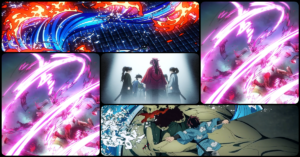

Over the years, a great number of heroes have emerged from anime, but very few have achieved a degree of cultural significance that makes them immortal. These heroes are recognized for the stories they tell, the ideals they uphold, and the influence they have on viewers everywhere, not just for their strength or spectacular skills. These ten heroes are the epitome of anime storytelling and have influenced the genre for many years, whether it be via tenacity, freedom, justice, or sacrifice.
1. Goku – The Universal Hero (Dragon Ball Series)
Perhaps the most famous anime character ever made is Goku. He has come to represent anime in general since making his debut in Dragon Ball. Goku’s quest for strength stems from a pure love of challenge and self-improvement, in contrast to many characters who desire power for retribution or personal benefit. He stands out from other shonen protagonists because of his upbeat disposition, unwavering spirit, and reluctance to compromise his morals. What it means to be a hero in anime is defined by Goku’s transformation from a helpless youngster with a tail to a warrior who saves the universe.
Goku’s ideology, in addition to his fighting skills, is what makes him legendary. He respects his opponents, believes in justice, and is always trying to push himself beyond his comfort zone without compromising his humanity. Goku’s impact has molded the shonen genre over many years. Because of him, ideas like training arcs, transformation sequences, and power scaling became commonplace. Goku is more than just a fictional character; he represents optimism, tenacity, and the limitless possibilities of the human (or Saiyan) spirit. He is still instantly recognized today and continues to inspire innumerable writers, artists, and fans worldwide.
Goku’s battles are epic due to their emotional resonance as well as their raw might. Every battle narrates a tale of self-improvement, cooperation, and triumphing against hardship. Goku’s resolve is mirrored by characters like Vegeta, Frieza, and Jiren, who emphasize his development and morals. Goku’s legacy goes beyond battle to include his roles as a mentor, friend, and father. He is one of anime’s most enduring heroes because of his capacity to foster love and loyalty even among erstwhile adversaries.
2. Naruto Uzumaki – The Symbol of Perseverance (Naruto Series)
Naruto Uzumaki is a hero whose story has a profound impact on viewers all around the world. He is shown as an underdog from the start: an orphan, a social misfit, and the host of a violent demon fox. Despite the loneliness and mockery he encounters, Naruto never gives up on his goals and pursues acceptance with bravery, compassion, and steadfast resolve rather than fear. One of the most interesting character arcs in anime history is his journey from a misinterpreted youngster to the esteemed Hokage.
Naruto’s bravery is both physical and emotional. He approaches hatred with empathy rather than rage. Instead of only defeating foes, he aims to transform hearts. His successes are significant on several levels because of this strategy, which highlights the transformational potential of empathy and fortitude. Themes of sacrifice, camaraderie, and legacy are also explored in Naruto’s journey. His relationships with friends like Sasuke and Sakura demonstrate the power of commitment and support for one another, while mentors like Jiraiya and Kakashi emphasize the value of mentorship.
Because it reflects common human hardships, Naruto’s story has resonance. His unwavering quest for acceptance is a reflection of his own experiences with bullying, rejection, and personal development. Naruto transforms from a hero to a symbol of hope for anyone attempting to overcome hardship by resisting the urge to give up. His impact extends beyond anime enthusiasts, influencing the writing of characters in contemporary shonen series and serving as an inspiration for several adaptations, video games, and merchandising.
3. Monkey D. Luffy – The Embodiment of Freedom (One Piece)
Monkey D. Luffy is an anime hero who is characterized by his quest for complete independence rather than hunger for fame or power. Living life on his terms is at the core of his desire to become the Pirate King. Luffy is one of the most adored characters in anime history because of his carefree disposition, limitless optimism, and unwavering devotion to his crew. Luffy’s unwavering attitude in the face of unfathomable peril shows that courage, resiliency, and moral integrity are the sources of true strength.
Luffy’s relationships enhance his bravery. Every member of his team reflects his values, and his readiness to put his life in danger to ensure their safety highlights the depth of his character. Luffy thrives on empathy, connection, and common objectives, in contrast to many heroes who become isolated with power. His influence goes beyond battle, as seen by his capacity to foster camaraderie and allegiance even among once adversaries. Luffy is a symbol of hope, stability, and trust in a chaotic world.
The simplicity and constancy of Luffy’s principles are what make him legendary. Luffy’s values are unambiguous: defend your friends, fight for freedom, and never give up on your dreams. Other heroes could battle with moral uncertainty. He has captivated audiences of all ages for more than 20 years thanks to his uncomplicated bravery. Additionally, Luffy’s voyage defies traditional shonen clichés by demonstrating that charm, compassion, and unflinching resolve may be just as potent as strength or cunning.
4. Ichigo Kurosaki – The Reluctant Guardian (Bleach)
Ichigo Kurosaki is an iconic hero precisely because he never sought the role of a savior. He begins as a normal high school student, burdened with the ability to see spirits and fight Hollows, supernatural threats that endanger humanity. Ichigo’s journey is defined not by ambition, but by duty and necessity. He fights to protect others, often at great personal risk, highlighting a form of heroism grounded in responsibility rather than glory.
Ichigo is especially interesting because of his inner turmoil. He battles his identity, juggling his Soul Reaper abilities with his human life, and confronting his inner emptiness. The spectator can examine the nuances of morality, strength, and obligation thanks to this duality. Ichigo is sympathetic and realistic because of his complex journey, which includes failures, setbacks, and periods of self-doubt, in contrast to other heroes whose development is linear.
Ichigo’s battles are investigations of loyalty, bravery, and sacrifice rather than merely physical confrontations. His successes frequently come at a high personal cost, supporting the idea that real heroism is rarely painless. His judgments and character are shaped by the connections he makes with friends, mentors, and even opponents. Because he embodies the reluctant hero—one who acts out of obligation and compassion rather than self-interest—Ichigo Kurosaki has endured in anime.
5. Light Yagami – The Complex Protagonist (Death Note)
One of the most contentious yet well-known anime heroes is Light Yagami. He comes across as a model student right away—intelligent, well-behaved, and morally upright. But after the Death Note is found, he becomes a powerful and morally complex person. Light thinks that by getting rid of criminals, he is making the world a better place, but his decline into godlike conceit makes it difficult to distinguish between good and evil.
The complexity of Light Yagami’s psychological journey is what sets him apart. His conflicts are moral and cerebral rather than based on physical prowess or fighting abilities. Every conflict is an exercise in strategy, cunning, and manipulation. His confrontation with L, the investigator who is desperate to stop him, symbolizes the ultimate fight between intelligence and ideology, transforming the story from a conventional action series into a dramatic chess match.
Light’s famous stature stems from the moral dilemmas he poses. He asks the audience to think on the nature of justice, the moral cost of total authority, and the corrupting influence of power. He may or may not be a “hero,” but his influence on anime narrative is indisputable. By demonstrating that bravery is not always obvious and that conviction and intelligence can be just as powerful as physical strength, Light Yagami reinvented the idea of a protagonist.
6. Eren Yeager – The Tragic Revolutionary (Attack on Titan)
Eren Yeager is a hero who defies categorization. Eren’s motivation stems from his desire for freedom and retribution against the Titans who destroyed his house when he was a determined, impetuous youngster. As he struggles with the obligations and repercussions of authority, his journey is characterized by fast physical and emotional change. Eren’s journey from a victim seeking justice to a revolutionary prepared to change the world serves as an example of the intricacy of contemporary anime narrative.
The way Eren’s story subverts conventional hero clichés is what makes him famous. Eren’s morals is more murky than those of Goku or Naruto. Audiences are forced to consider whether the ends justify the means because of his readiness to make morally dubious decisions for what is seen as a greater good. His transformation from a likable hero to a contentious anti-hero reflects themes of sacrifice, freedom, and battle, mirroring the moral complexity of real-life conflicts.
Tragic events are intricately linked to Eren’s bravery. Every triumph has a price, and every choice he makes leaves a deep emotional mark on both him and others around him. His unwavering focus strains his connections with friends and family, underscoring the human cost of leadership and the weight of fate. By the end of the series, Eren represents both dread and optimism, proving that the most appealing heroes are human in every way despite their flaws.
7. Edward Elric – The Human Hero (Fullmetal Alchemist)
Edward Elric is a hero whose strength is determined by his bravery, knowledge, and moral fortitude rather than by his physical prowess. His journey starts with a disastrous error that loses him an arm, a leg, and almost his brother’s life: trying to resurrect his mother through human transmutation. The story is driven by Edward’s desire to rebuild what was lost, emphasizing the value of accountability, consequences, and personal development.
Edward’s humanity is the foundation of his bravery. In contrast to many anime heroes who acquire supernatural powers, Edward encounters difficulties that put his moral compass and emotional fortitude to the test. He solves challenges in ways that show creativity and moral clarity, using strategy and intelligence just as much as fighting prowess. Edward is further solidified as a realistic, sympathetic hero by his refusal to take cheap routes or seek godlike power.
Edward exhibits unrelenting compassion throughout his trip. He puts other people’s welfare first, frequently placing himself in danger to defend others who are weaker than him. He transcends the usual shonen protagonist because of his dedication to justice and humanity. Edward Elric is a hero who serves as a reminder to viewers that real power comes from seeing the repercussions of one’s actions and learning from them rather than from vanquishing adversaries.
8. Tanjiro Kamado – The Gentle Hero (Demon Slayer)
Resilience and empathy characterize Tanjiro Kamado as a hero. Tanjiro’s journey is driven by compassion rather than just retaliation after demons brutally slaughter his family. He fights animals who have wiped off countless lives while trying to comprehend their suffering and humanity. Tanjiro’s distinct style of bravery sets him apart from many conventional shonen heroes, who frequently act only out of rage and strength.
Tanjiro’s character is notable for striking a balance between kindness and strength. He masters the Breath of Water techniques and gains extraordinary fighting skills, but his triumphs are never devoid of compassion. He acknowledges the unfortunate circumstances that prompted his adversaries to conduct evil deeds and treats them with some respect. Tanjiro’s emotional intelligence is just as strong as his physical skill, supporting the notion that genuine bravery requires both strength and compassion.
His relationships with other demon slayers and his sister Nezuko highlight his function as a moral compass in a chaotic world. Tanjiro fosters devotion and respect via honesty, compassion, and tenacity rather than fear. Tanjiro Kamado is one of the most cherished and recognizable protagonists in contemporary animation because his tale shows that bravery and compassion can coexist.
9. Izuku Midoriya (Deku) – The Symbol of Hope (My Hero Academia)
In a world where superpowers rule, Izuku Midoriya, also known as Deku, represents tenacity and optimism. Deku begins as an underdog, frequently disregarded and undervalued, because he was born without eccentricities in a world that prizes them above everything else. The central theme of his story is his steadfast ambition to become a hero despite his initial impotence. Deku’s transformation from helpless youngster to All Might’s heir is evidence of tenacity, guidance, and self-confidence.
Deku’s selflessness characterizes his valor. In contrast to many heroes who battle for their own fame, Deku puts other people’s safety and wellbeing first. He can strategize in combat by using his analytical mind to turn perceived vulnerabilities into advantages. He also exemplifies humility and sensitivity, continuously picking up knowledge from peers, mentors, and even enemies. These characteristics demonstrate a contemporary definition of heroism in which mental acuity, readiness, and emotional development are just as significant as physical strength.
Deku’s relatability is what makes him famous. His challenges, uncertainties, and victories resonate with audiences. His story shows that anyone who is prepared to put in the effort, persevere, and behave honorably may become a hero. Deku is more than just a representation of personal development; he stands for the notion that bravery and optimism may uplift others and mold the next generation of heroes.
10. Saitama – The Subversive Legend (One Punch Man)
Saitama, also referred to as One Punch Man, uses humor to redefine heroism while retaining deep thematic depth. In contrast to other anime heroes, Saitama is extremely powerful and can vanquish any adversary with a single blow. This initially gives the impression that he is unbeatable and unbeatable. But existential boredom and the pursuit of meaning are Saitama’s real struggles, not strength.
Because Saitama’s bravery defies stereotypes, it is subversive. Saitama has already attained his pinnacle of power, whereas other protagonists develop via training, hardship, and emotional strife. As a result, his struggles are more about figuring out where he fits in the world than they are about winning. The series is able to examine topics of ambition, fulfillment, and the meaning of heroism in a way that few anime can because of its distinctive methodology.
Saitama is still remembered despite his humorous style because he is a symbol of tenacity and modesty. He keeps up his training and pursues challenges out of self-discipline rather than necessity. Audiences who understand the emptiness that can accompany boundless power are drawn to his straightforward but insightful perspective. Saitama demonstrates that bravery is not just about action and strength but also about one’s own attitude and consistency.
The Enduring Legacy of Iconic Anime Heroes
Goku, Naruto, Luffy, Ichigo, Light, Eren, Edward, Tanjiro, Deku, and Saitama—the ten heroes discussed in this article—represent the height of anime narrative. Every figure represents a different ideal, ranging from independence, intelligence, and moral complexity to tenacity and empathy. They strike a chord with viewers because they depict human hardships, victories, and emotional development under extreme conditions.
Despite their supernatural powers, these heroes are relatable, which is what keeps them everlasting. They encounter difficulties that put their character, morality, and emotional fortitude to the test in addition to their strength. Their experiences demonstrate the diversity of heroism, which includes bravery, moral fortitude, sacrifice, and compassion. These characters have affected anime storytelling globally, defined the shonen genre, and inspired innumerable admirers throughout the years.
We can better comprehend why anime heroes continue to be cultural icons by learning about their experiences, inspirations, and legacies. They ensure that their influence will last for generations by imparting lessons about tenacity, morality, empathy, and the human condition. These ten personalities are more than simply fictional characters; they are representations of inspiration, hope, and the timeless value of anime narrative.